





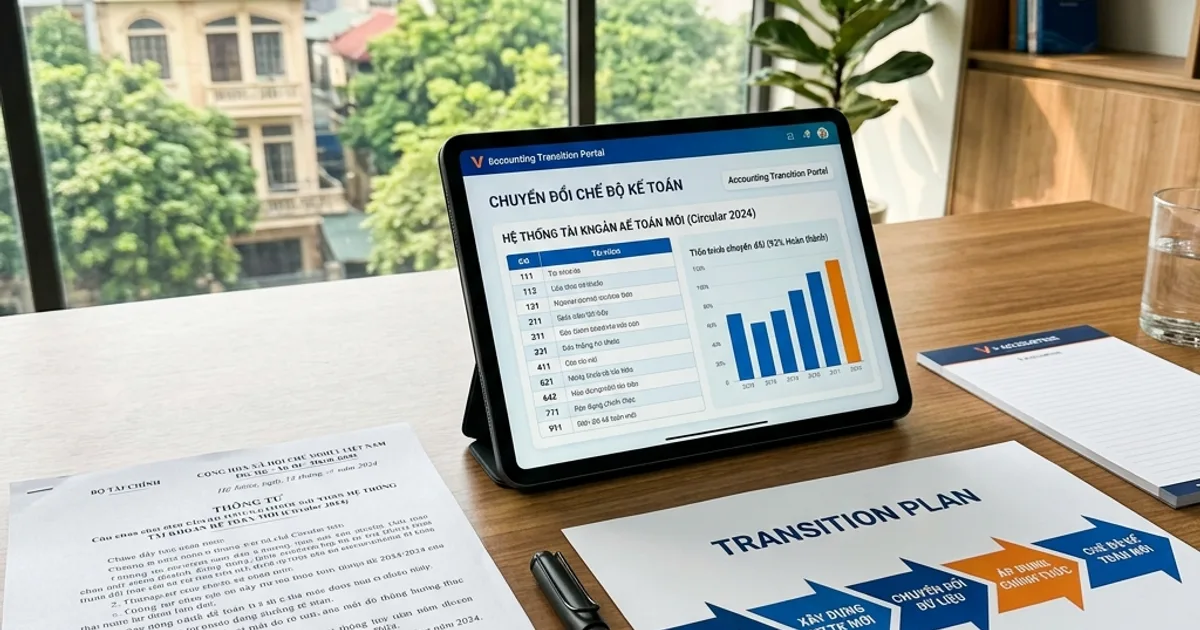


The Ministry of Finance promulgated Circular No. 99/2025/TT-BTC on October 27, 2025, taking effect on January 1, 2026, officially superseding Circular 200/2014/TT-BTC on the corporate accounting regime. This regulatory overhaul represents an essential milestone in Vietnam’s strategic transition toward International Financial Reporting Standards (IFRS) under the national accounting convergence roadmap approved in Decision 345/QD-BTC, paving the way for voluntary and mandatory IFRS application under Circular 118/2026/TT-BTC.
For foreign-invested enterprises (FDIs), Circular 99 fundamentally reshapes Vietnam accounting and financial reporting compliance. It establishes a modern accounting architecture that bridges historical cost conventions with fair-value measurement principles. It grants corporate finance teams statutory autonomy to customize sub-accounts within global ERP platforms (such as SAP, Oracle, NetSuite), while formalizing specialized ledger accounts for Global Minimum Tax (Pillar Two) liabilities and enforcing corporate-wide consolidated reporting that eliminates 100% of internal transactions across branch networks. Managing these structural adjustments is critical for foreign directors, chief financial officers, and tax leaders preparing corporate accounting systems for fiscal year 2026.
1. Terminology Standardization and Reporting Scope
Circular 99/2025/TT-BTC executes structural terminology standardization to align Vietnam’s statutory framework with international reporting conventions:
- Renaming Core Financial Schedules: The traditional “Balance Sheet” (Bảng cân đối kế toán) is officially renamed the “Statement of Financial Position” (Báo cáo tình hình tài chính). This update is not merely cosmetic; it is paired with structural realignments of asset and liability classifications prioritizing economic substance over legal form.
- Abolition of Combined Financial Statements: The historical concept of “Combined Financial Statements” (Báo cáo tài chính tổng hợp) previously used for branch networks is eliminated. Under Circular 99, enterprises with dependent operating units must issue Consolidated Financial Statements for the entire corporate legal entity, fully eliminating 100% of internal transactions, intra-company reciprocal debts, and unrealized intra-group profits between headquarters and operational branches.
This mandate requires FDI corporations managing multiple factories or regional operational sites in Vietnam to establish monthly intercompany reconciliation procedures prior to statutory year-end book closing. Internal transfer pricing across manufacturing and distribution units must be substantiated with granular elimination vouchers. Specifically, accountants must eliminate reciprocal internal revenues (Account 511) against internal cost of sales (Account 632), and offset internal receivables (Account 136) against internal payables (Account 336). Any unrealized profit embedded in inventory transferred between locations must be completely eliminated at fiscal closing.
2. Functional Currency and Foreign Exchange Accounting Rules
Circular 99 reinforces strict foreign exchange control discipline and statutory criteria for adopting functional accounting currencies:
- Criteria for Adopting Foreign Currencies: FDI enterprises are permitted to select an approved foreign currency (such as USD, EUR, or JPY) as their functional accounting currency only when satisfying criteria under the Law on Accounting: the foreign currency must be the primary currency used in pricing commercial sales contracts and receipts, and must dominate procurement payments for raw materials and operating overhead.
- Restrictions on Currency Changes: Enterprises cannot alter their functional currency mid-year. Any currency conversion requires a documented, material transformation in underlying commercial operations and can take effect only from the first day of a new financial year.
- Exchange Rate Application and Year-End Revaluation: Enterprises may select actual transaction exchange rates (buying rate, selling rate, or approximate rates) from accredited commercial banks where transactions occur, provided the chosen method is applied consistently throughout the accounting period. Year-end revaluation of foreign currency monetary balances must strictly follow the spot buying or selling rates announced by supervisory commercial banks. Net foreign exchange gains or losses must be transferred directly to Account 515 (Financial Income) or Account 635 (Financial Expenses) in profit or loss, rather than deferred indefinitely in equity reserves.
3. Chart of Accounts Modernization and Enterprise Autonomy
Circular 99 establishes accountable statutory autonomy for enterprises in configuring operational ledgers:
- Autonomy from Level 2 Accounts Onward: Enterprises are empowered to modify, subdivide, or create sub-accounts from Level 2 and Level 3 onward to support internal corporate management without submitting prior approval requests to the Ministry of Finance. However, this autonomy carries statutory liability: the enterprise must formally promulgate an Internal Accounting Policy Regulation (Quy chế hạch toán kế toán nội bộ) pursuant to Article 10 of Law on Accounting No. 88/2015/QH13 (as amended by Law 56/2024/QH15). This regulation establishes legal accountability for the Legal Representative and Chief Accountant regarding ledger integrity.
- Specialized Accounts for International Integration: Circular 99 introduces dedicated accounts reflecting modern commercial transactions:
- Account 215 (Biological Assets): Tracks agricultural assets, breeding livestock, and biotechnology assets at cost less accumulated depreciation and impairment, aligning with international standards.
- Account 82112 (Supplemental CIT Under Pillar Two): Dedicated to recording Global Minimum Tax top-up liabilities under QDMTT and IIR rules, segregating normal statutory corporate income taxes from supplemental domestic minimum top-up taxes.
- Account 332 (Dividends and Profits Payable): Segregates profit distribution liabilities from operational trade payables, providing transparent audit trails for outbound remittances.
- Account 137 (Accrued Revenues): Records unbilled receivables where contractual performance obligations have been satisfied under IFRS 15 principles.
- Account 246 (Long-Term Prepaid Expenses): Replaces legacy sub-accounts to provide clearer multi-year amortization tracking.
- Account 351 (Provisions for Liabilities): Formalizes provisions for product warranties, onerous commercial contracts, and formal restructuring obligations.
- Abolition of Periodic Inventory Accounts: Circular 99 officially discontinues periodic inventory accounts (such as Accounts 611 and 631), standardizing the perpetual inventory method for foreign enterprises.
4. Asset and Inventory Accounting Principles
Valuation and provisioning rules under Circular 99 reflect heightened prudence and international alignment:
- Fixed Asset Depreciation: Enterprises must periodically review asset useful economic lives and depreciation methods. When significant variations occur in expected asset consumption patterns, depreciation adjustments must be accounted for prospectively as changes in accounting estimates under VAS 29. Tools and supplies allocated over multiple periods are subject to a strict 5-year maximum amortization limit.
- Inventory Valuation and Provisions: Write-downs of inventory to net realizable value (NRV) must be performed at the financial closing date. Abnormal manufacturing idle capacity costs and wasted material overhead must be charged directly to cost of goods sold rather than capitalized into inventory valuations. Physical inventory stocktaking must be observed by independent auditors under VSA 501.
- Internally Generated Intangible Assets: Research expenditures must be expensed immediately in profit or loss; development expenditures may only be capitalized when meeting strict statutory technical and economic feasibility criteria under VAS 04. Capitalized software development costs require comprehensive time-tracking verification and formal management milestone sign-offs.
5. Reclassification of Redeemable Preference Shares and Liabilities
A transformative change in Circular 99 involves evaluating the true economic substance of equity and debt instruments:
- Reclassification of Redeemable Shares: Under legacy Circular 200, all share capital was presented within Owners’ Equity (Account 411). Circular 99 dictates that preferred shares containing mandatory issuer redemption clauses at a fixed future date must be reclassified as Financial Liabilities (Class 3 Accounts). They are classified between current liabilities and long-term liabilities based on contractual redemption maturity dates.
- Accounting for Preferred Dividends: Fixed dividends distributed on redeemable preference shares can no longer be deducted from undistributed after-tax profits in equity; they must be expensed directly as Financial Expenses (Account 635) comparable to debt interest.
This adjustment directly reshapes corporate capital structuring, venture capital agreements, and financial covenants for FDI enterprises. Foreign parent entities structuring mezzanine financing must align corporate charter clauses to avoid distorting local debt-to-equity leverage ratios under commercial bank lending agreements.
6. Accounting Framework for Non-Going Concern Entities
Circular 99 establishes comprehensive accounting mechanisms for enterprises undergoing corporate restructuring, liquidation, or bankruptcy:
- Exit from Historical Cost Conventions: When an enterprise fails the going-concern assumption, the historical cost principle ceases to apply. Assets and liabilities must be revalued based on net realizable value or fair value payable upon settlement. Anticipated liquidation and disposal expenditures must be accrued as liabilities under Account 351.
- Dedicated Reporting Templates: Circular 99 prescribes specialized financial reporting schedules for non-going concern entities, requiring granular disclosures regarding asset realization timelines, employee settlement liabilities, and tax clearance obligations. These schedules facilitate structured liquidations, mergers, de-mergers, and bankruptcy filings under Vietnamese commercial courts.
7. 2026 Implementation Roadmap and Compliance Checklist
To ensure an orderly transition to Circular 99/2025/TT-BTC without operational friction, foreign enterprises should implement 5 strategic actions:
- Promulgate Internal Accounting Policies: Prior to December 31, 2025, formally approve the corporate Internal Accounting Policy Regulation establishing customized sub-accounts under Article 10 of Law on Accounting 88/2015/QH13 (as amended by Law 56/2024/QH15).
- Upgrade ERP and Accounting Systems: Coordinate with software vendors (SAP, Oracle, NetSuite) to update financial statement layout templates and configure new accounts (Accounts 215, 82112, 332, 137, 246, 351).
- Reconcile Opening Balances: Execute comprehensive account mapping and transfer trial balance opening balances from Circular 200 to Circular 99 effective January 1, 2026, documenting all transition differences in formal working papers.
- Train Financial Personnel: Conduct structured training for accounting teams on intercompany transaction eliminations and foreign exchange calculation rules under new reporting schedules.
- Coordinate with Independent Auditors and Regulatory Authorities: Engage early with licensed independent audit firms to validate transition mapping worksheets before statutory year-end closing and ensure timely submission within 90 days after fiscal year-end. Note that under Decree 150/2025/ND-CP, annual audited financial statements of FDI companies must be submitted to the provincial Department of Finance (Sở Tài chính) in addition to tax and statistics authorities.
Disciplined preparation for Circular 99/2025/TT-BTC safeguards regulatory compliance, reinforces institutional financial transparency, and protects corporate cross-border profit remittances in Vietnam. Foreign enterprises seeking professional assistance with chart of accounts mapping and internal accounting policies can explore our specialized statutory bookkeeping and accounting services.